Hello and welcome, readers. I’m an old-school journalist, and I’ll be honest: the executive sedan segment in India, the famous D-Segment, has always held a special place in my heart. It’s the segment where style, substance, and affordability meet. And for a good few years, the car that consistently offered the most value for money (VFM) in this category was the Hyundai Elantra.
While the market has shifted dramatically towards SUVs—and the Elantra, sadly, is no longer officially on sale as a new model in India—the last-generation Elantra (the facelifted AD series) deserves a comprehensive look. It was, and remains, an incredibly compelling package in the used car market.
This car was never about aggressive performance like some European rivals; it was about offering a premium, comfortable, and feature-rich experience at a price tag that consistently undercut the competition.
The last recorded ex-showroom starting price for the Hyundai Elantra was around ₹15.90 Lakh for the base petrol variant, going up to over ₹21.13 Lakh for the top-end diesel automatic. That aggressive pricing was its major weapon. Let’s dive into what made this sedan a true contender.
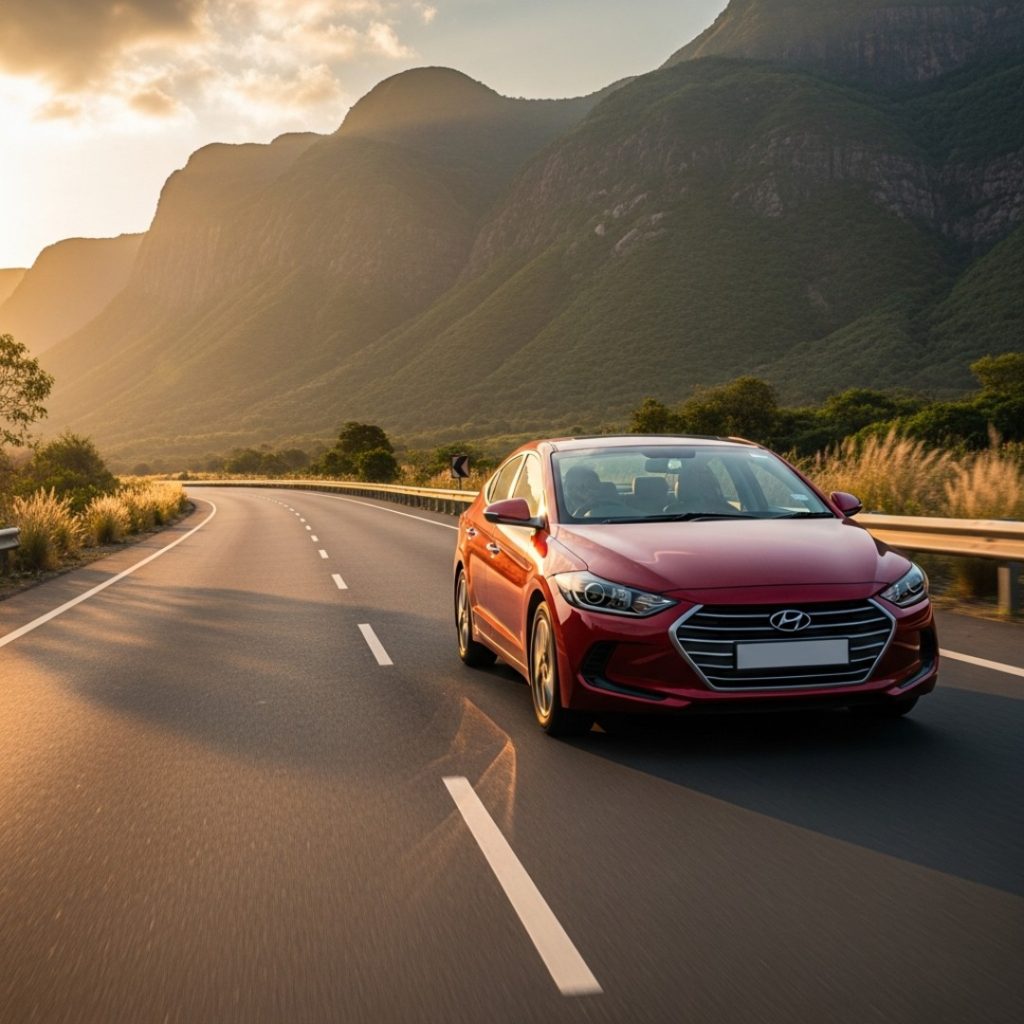
Quick Specs Table: Hyundai Elantra (AD) Highlights
The Elantra was offered in two distinct engine choices for the Indian market, covering both petrol and diesel preferences.
| Specification | 2.0L Petrol (VTVT) | 1.5L Diesel (CRDi) |
| Engine Type | Naturally Aspirated, 4-Cylinder | Turbocharged, 4-Cylinder |
| Engine Displacement | 1999 | 1493 cc} |
| Max Power | 150 bhp 6200 rpm} | 113hp4000 rpm} |
| Max Torque | 192 Nm 4000pm | 250 Nm1500rpm} |
| Transmission | 6-speed Manual/6-speed Torque Converter AT | 6-speed Manual/6-speed Torque Converter AT |
| Boot Space | 458 litres | 458 itres} |
| Ground Clearance (Unladen) | 165 { mm} | 165 mm} |
| Fuel Tank Capacity | 50 { litres} | 50 litres |
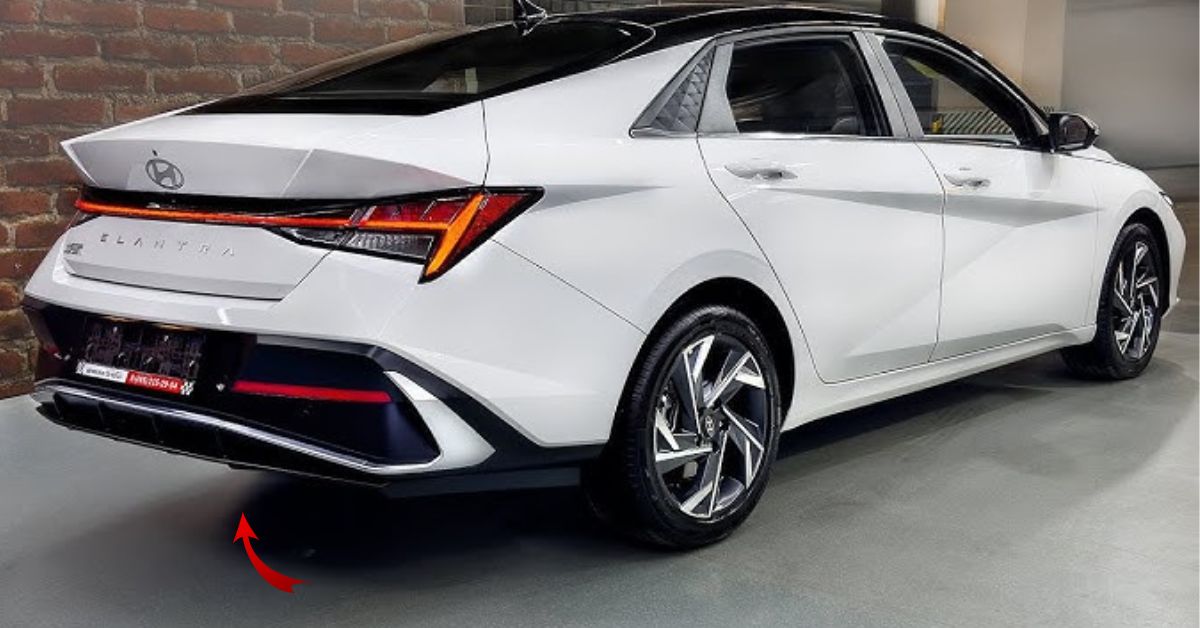
Exterior Design & Road Presence: The Edgy, Angular Look
Hyundai adopted its aggressive ‘Sensuous Sportiness’ design philosophy with the Elantra facelift. While the previous generation was more fluid and curvy, this iteration went completely angular. It was a polarizing design, but I personally found it gave the car fantastic road presence.
The Stance and Styling
- Front Fascia: The most dramatic element is the cascading hexagonal grille that dominates the front, seamlessly merging into the sharp, aggressive headlamp cluster. It almost looks like a single, wide, low-slung piece. The triangular fog lamp housing further emphasizes the sporty, almost fighter-jet-like nose.
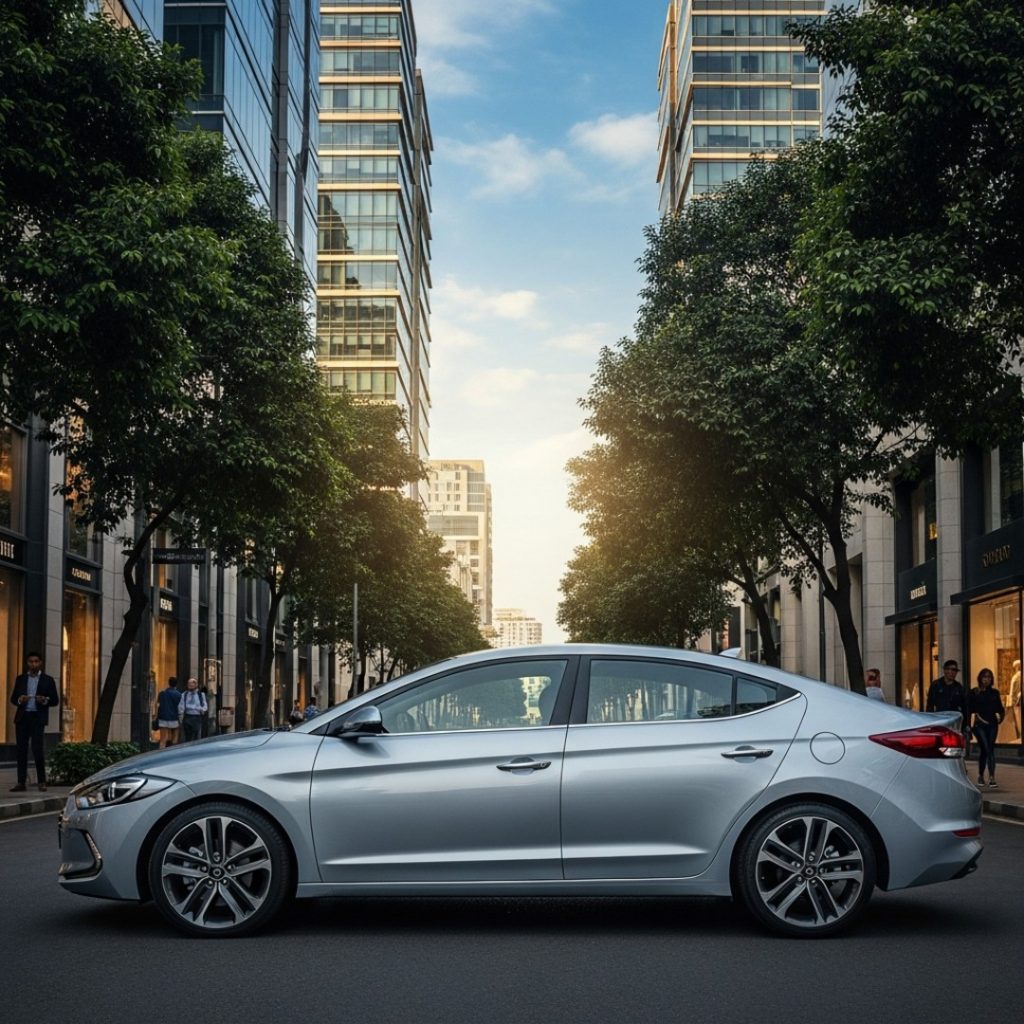
- Side Profile: It maintains the classic coupe-like roofline of a sedan, which gives it a sleek, fastback appearance. The $16 \text{ inch}$ diamond-cut alloy wheels look sharp and fill the wheel arches adequately.
- Rear End: The back is equally controversial. The new tail lamps have a distinctive boomerang or Z-shaped LED signature that stretches across the boot lid, making it highly recognizable at night. The word ‘ELANTRA’ is spelled out prominently across the boot.
Does it turn heads on the road? Absolutely. Unlike the more conservative designs of the Toyota Corolla Altis or even the Honda Civic, the Elantra demands attention. It’s sleek, low-slung, and distinctly Korean in its modern, edgy aggression. For the segment buyer who wants a bold statement, this design delivered.
Interior, Comfort & Features: A Feature Fiesta
If there is one area where Hyundai consistently outshines the competition, it’s the sheer volume of high-quality features bundled into their cars. The Elantra’s cabin is a classic example of this.
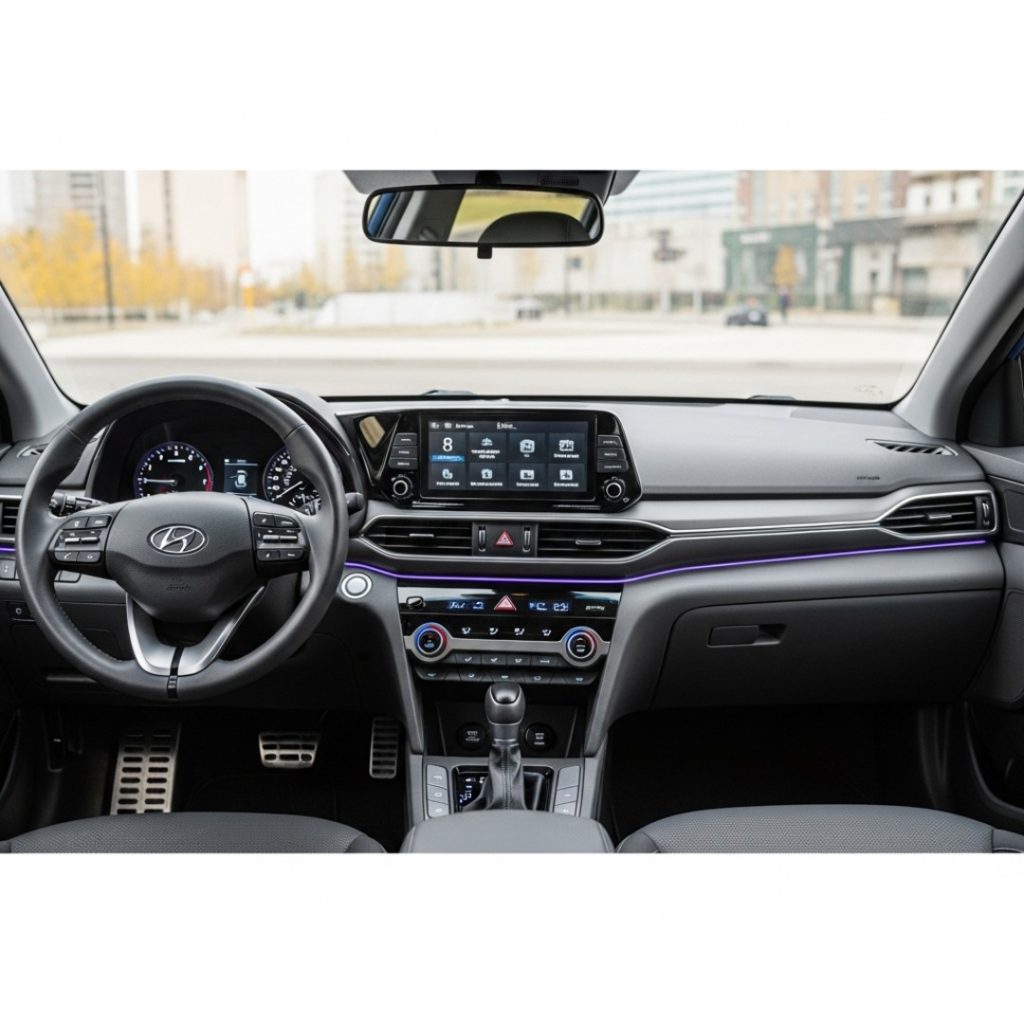
Dashboard and Material Quality
- Layout: The dashboard is driver-focused, with a clean and logical layout. The material quality is good, though not quite up to the rock-solid, Germanic standard of the Skoda Octavia. You get a mix of soft-touch plastics and silver accents.
- Infotainment: The touchscreen infotainment system (with Apple CarPlay and Android Auto) is crisp, responsive, and easy to use. It’s paired with Hyundai’s excellent Blue Link connected car technology, offering remote engine start, climate control, and geo-fencing—a feature usually found in much more expensive vehicles.
Space, Comfort & The Premium Touch
- Front Seats: The seats are large, well-bolstered, and extremely comfortable, perfect for long highway runs. The driver gets 10-way electric adjustability.
- Rear Seats: This is a key metric for an executive sedan. The 2700wheelbase offers generous knee and legroom. Headroom, due to the sloping roofline, is adequate for anyone up to abouCritically, three people can sit in the back for short trips, though two occupants will be supremely comfortable.
- Features that Matter:
- Ventilated Front Seats: A literal lifesaver in the peak Indian summer. A huge plus over rivals.
- Electric Sunroof: Adds to the airy feel of the cabin.
- Dual-Zone Climate Control: Allows the driver and passenger to set independent temperatures.
- Rear AC Vents: Standard, ensuring good cooling for back passengers.
Highlighting Missing Features: For a car at this price point (even when new), it crucially missed out on radar-based ADAS (Advanced Driver-Assistance Systems), which began appearing in rivals like the Honda Civic in international markets.
Engine Performance & Driving Dynamics: Refined and Torquey
The Elantra offered two very different driving characters based on the engine chosen.
Petrol (VTVT)
- The Feel: The naturally aspirated engine produces a stronandof torque. It’s a very linear and refined engine. In the city, the power delivery is smooth, making for comfortable cruising.
- Highway Drive: It’s brisk, but the power delivery is so linear that you won’t feel that dramatic push-back-in-your-seat surge. It maintains triple-digit speeds effortlessly and quietly. However, when paired with the 6-speed torque converter Automatic Transmission (AT), it’s not the fastest shifting gearbox in the world—it prioritizes comfort over sporty gear changes.
Diesel (CRDi)
- The Feel: This engine is the real hero for the highway user. It offers a punchyf torque starting from a low That turbo-diesel pull is fantastic for quick overtakes and highway cruising.
- City Drive: The manual version is easy to manage due to the light clutch action, but the diesel AT variant is butter-smooth and makes city traffic completely effortless, thanks to the massive low-end torque.
Suspension and Handling
- Handling Indian Potholes: This is where the Elantra excelled over its European rivals. The suspension is set up to be soft, favoring ride comfort over razor-sharp handling. The suspension absorbs potholes easily; it simply glides over broken patches of tarmac, insulating the occupants brilliantly.
- Body Roll: The trade-off is handling. When you push the car hard into a corner at speed, there is noticeable body roll. It’s not a car that encourages aggressive driving like the Skoda Octavia; it rewards a smooth, comfortable driving style. The steering is light at low speeds (great for parking) but gains adequate weight on the highway.
Safety (Crucial Section): The ASEAN NCAP Standard
Hyundai equipped the Elantra with a comprehensive safety kit, especially in the top-end trims.
- Airbags: It comes with a total of 6 Airbags (Driver, Passenger, two side, and two curtain airbags) in the higher variants.
- Electronics: Standard features include ABS with EBD, Electronic Stability Control (ESC), Vehicle Stability Management (VSM), and Hill Start Assist Control (HAC).
- Build & Rating: While it was never tested by Global NCAP (GNCAP), the version of the Elantra sold in Southeast Asia (similar to the India-spec car in generation) achieved a 5-Star Rating in ASEAN NCAP crash tests, which provides strong reassurance regarding its structural integrity and adult occupant protection.
Real World Mileage (The Truth): The Efficiency Question
The official ARAI figures for the Elantra look conservative compared to mass-market sedans, but for a D-segment car with these engine sizes, they were competitive.
| Powertrain | ARAI Claimed Mileage | Real World City Mileage | Real World Highway Mileage |
| 2.0L Petrol (AT/MT) | 14.8-15.0 kmpl | 9.5-11.5 | 13-15 |
| 1.5L Diesel (AT/MT) | 17.3kmpl | 13.5-15.0 | 16-18 |
The real mileage in city traffic for the petrol variant, especially the automatic, hovers around themark, which is acceptable for aengine with. The diesel engine is where the real efficiency lies, regularly delivering on the highway, making it a fantastic mile-muncher.
Read more : Audi RS Q8
THE COMPETITION: Hyundai Elantra vs Rivals
The Hyundai Elantra’s primary rivals in the D-segment (before it was discontinued) were the segment leaders: the Skoda Octavia and the Honda Civic (which is also discontinued).
Hyundai Elantra vs Skoda Octavia vs Honda Civic
| Feature/Spec | Hyundai Elantra (AD) | Skoda Octavia (A7) | Honda Civic (10th Gen) |
| Engine (Petrol) | 2.0 (150 | 1.4 1.8 Turbo} (177 | 1.8 NA} (140 |
| Engine (Diesel) | 1.5urbo} (113 | 2.0 L Turbo} (141 | 1.6 Turbo} (120 |
| Key Feature | Ventilated Seats, Blue Link (Connected Tech) | Superior Build Quality, Massive Boot | Sharp Handling, Premium Cabin Aesthetics |
| Transmission (Auto) | 6-speed Torque Converter | 7-speed DSG (DCT) | CVT |
| Ride Quality | Soft & Comfort-focused (Best over potholes) | Firm & Dynamic | Balanced (Leans towards sporty) |
| Base Ex-Showroom Price | ₹15.90 Lakh | ₹17.50 Lakh(Higher segment) | {₹17.94 Lakh |
Winner: Which one provided better Value For Money (VFM)?
While the Skoda Octavia was the undisputed king for sheer performance, build quality, and dynamic driving, it was also significantly more expensive and less focused on features like ventilated seats.
The Honda Civic offered a sportier drive, a stunning cabin design, and great handling.
The Hyundai Elantra was the clear VFM champion. It provided 90% of the luxury of the Octavia and Civic, added segment-first comfort features (like those amazing ventilated seats), and did it all while undercutting their prices by a significant margin. It was the most practical, feature-heavy, and comfort-oriented car of the three for the typical Indian executive.
FINAL VERDICT: The Smart Buy (Especially Used)
The Hyundai Elantra was a genuinely underrated car in a declining segment. It offered a luxurious, feature-packed cabin and a comfortable, absorbent ride—qualities essential for Indian roads—all wrapped in a bold, attention-grabbing design. It’s a sad casualty of the SUV craze, but its legacy is one of offering premium features at a competitive price.
Buy the Hyundai Elantra if:
- You want a comfortable, effortless, feature-rich sedan that is supremely comfortable over bad roads.
- You prioritize premium cabin features like ventilated seats and Blue Link connectivity.
- You are looking for a fantastic used-car deal in the executive segment, offering luxury below ₹15 Lakh.
Skip it if:
- You want razor-sharp handling and a German-style driving experience (Go for Octavia).
- You prioritize the latest generation of ADAS active safety features.
- You are worried about the discontinued status affecting spare part availability or resale value in the long term (though Hyundai service network is excellent).
FAQs (People Also Ask)
1. Has the Hyundai Elantra been discontinued in India?
Yes. The Hyundai Elantra (AD generation) was silently delisted from the official Hyundai India website and bookings were stopped, effectively discontinuing the model as a new car purchase in India. This was largely due to the low sales volume caused by the shift towards SUVs
2. Is the Elantra 1.5L Diesel Engine Reliable?
Yes. Theengine is a highly reliable unit that has been extensively used and proven in other Hyundai-Kia models like the Creta and Seltos. It is known for its refinement, excellent torque, and high fuel efficiency.
3. Does the Hyundai Elantra have a sunroof?
Yes, the higher-spec variants (SX and SX(O)) of the last-generation Hyundai Elantra came equipped with an electrically operated sunroof
4. What is the ground clearance of the Hyundai Elantra?
The Hyundai Elantra had a competitive unladen ground clearance of 165 which is relatively good for a sedan and helps it easily clear most of the large speed breakers and bad patches commonly found on Indian roads.