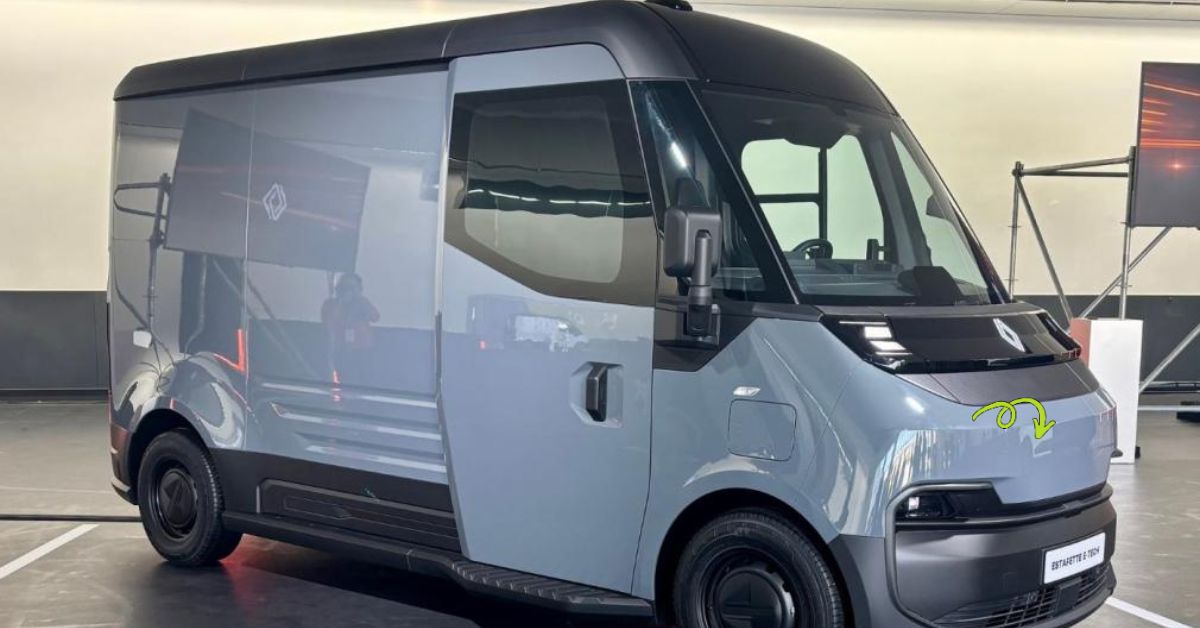
The global shift toward sustainable logistics has taken a nostalgic yet high-tech turn. Renault has officially revived the iconic Estafette nameplate, transforming the classic 1950s workhorse into a cutting-edge electric van designed specifically for the “last-mile” delivery era. First showcased as a concept at the IAA Transportation show, the modern Renault Estafette is not just a tribute to the past; it is a Software-Defined Vehicle (SDV) built to navigate the narrow, congested streets of modern cities while slashing operational costs for businesses.
As urban centers globally, including major Indian metros, move toward stricter emission norms and “green” delivery zones, the Estafette represents a new breed of commercial vehicle. Developed under the Flexis joint venture—a collaboration between the Renault Group, Volvo Group, and CMA CGM—this electric van combines the agility of a small car with the hauling capacity of a much larger vehicle.
A Modern Rebirth: Blending Heritage with Innovation
The original Renault Estafette, launched in 1959, was a pioneer for being the brand’s first front-wheel-drive vehicle, maximizing interior space. The 2026 production version follows this philosophy. Visually, it retains the “friendly” face of its ancestor, featuring round LED headlamps and a distinctive boxy silhouette. However, the similarities end at the surface.
Underneath, the Estafette sits on the new FlexEVan platform. This architecture allows the van to be remarkably compact—at 4.87 meters long, it occupies the same footprint as a Renault Kangoo—yet it stands 2.60 meters tall. This height is a game-changer for delivery professionals, as it allows a person up to 1.90 meters tall to stand completely upright inside the cargo area, significantly reducing physical strain during a long shift.
Tech-First Approach: The Software-Defined Vehicle
What truly sets the Estafette apart is its Software-Defined Vehicle (SDV) architecture developed by Ampere, Renault’s EV specialist division. Unlike traditional vans where software is an afterthought, the Estafette is built like a smartphone on wheels. This allows for:
- Real-time Updates: The vehicle can receive “over-the-air” updates to improve battery efficiency or add new features without visiting a service center.
- Cost Efficiency: Renault claims the SDV tech can help fleet operators reduce usage costs by nearly 30% through predictive maintenance and better energy management.
- Digital Cockpit: The driver is greeted by a zesty yellow interior featuring a 7-inch instrument cluster and a 12-inch central screen. Unique to this model are two 10-inch vertical side screens that act as digital mirrors, providing a clear view of the van’s surroundings via external cameras.
Why It Matters for the Indian Market
While the Estafette is primarily targeted at European cities initially, its design language and utility hold significant relevance for India. With the rapid growth of e-commerce in cities like Delhi, Mumbai, and Bengaluru, the demand for efficient, low-emission delivery vehicles is at an all-time high.
The Estafette’s 10.3-meter turning circle—comparable to that of a small hatchback like the Renault Clio—makes it ideal for the tight lanes of Indian markets. Furthermore, its ultra-fast 800V charging capability, which allows a 15% to 80% charge in under 20 minutes, addresses the “downtime” concerns that often hinder EV adoption in Indian logistics.
Production and Future Outlook
Renault has confirmed that the production-ready Estafette will begin rolling off the assembly line at the Sandouville plant in France in 2026. It will be offered with two battery options: a long-range NMC (Nickel Manganese Cobalt) battery for approximately 450 km of range and a more affordable LFP (Lithium Iron Phosphate) battery for shorter city routes.
Read More : Honda N-Box
As of now, Renault India has not officially confirmed a launch date for the Estafette in the domestic market. However, given Renault’s “International Game Plan 2027,” which identifies India as a key strategic hub, the technology and platform underlying the Estafette are very likely to influence future electric commercial offerings in the country.
Frequently Asked Questions (FAQs)
1. Is the Renault Estafette coming to India?
While Renault has confirmed the global launch for 2026, there is no official announcement for an India launch yet. However, Renault is focusing heavily on the Indian market for its next phase of EV expansion.
2. What is the range of the electric Renault Estafette?
The van is expected to offer two battery variants. The higher-spec version is targeted to provide a range of up to 450 km (WLTP), while the base version will cover around 350 km on a single charge.
3. What makes it different from a regular delivery van?
The Estafette is a “Software-Defined Vehicle,” meaning its performance and features can be updated digitally. It also features a unique high-roof design that allows drivers to stand upright inside and a rear roller shutter door for easy loading in tight spaces.
4. How fast can the Renault Estafette charge?
Thanks to its advanced 800V electrical architecture, the Estafette can charge from 15% to 80% in less than 20 minutes when using a DC fast charger.
5. Who is building the Renault Estafette?
It is being developed by Flexis, a joint venture between the Renault Group, Volvo Group, and the logistics giant CMA CGM.