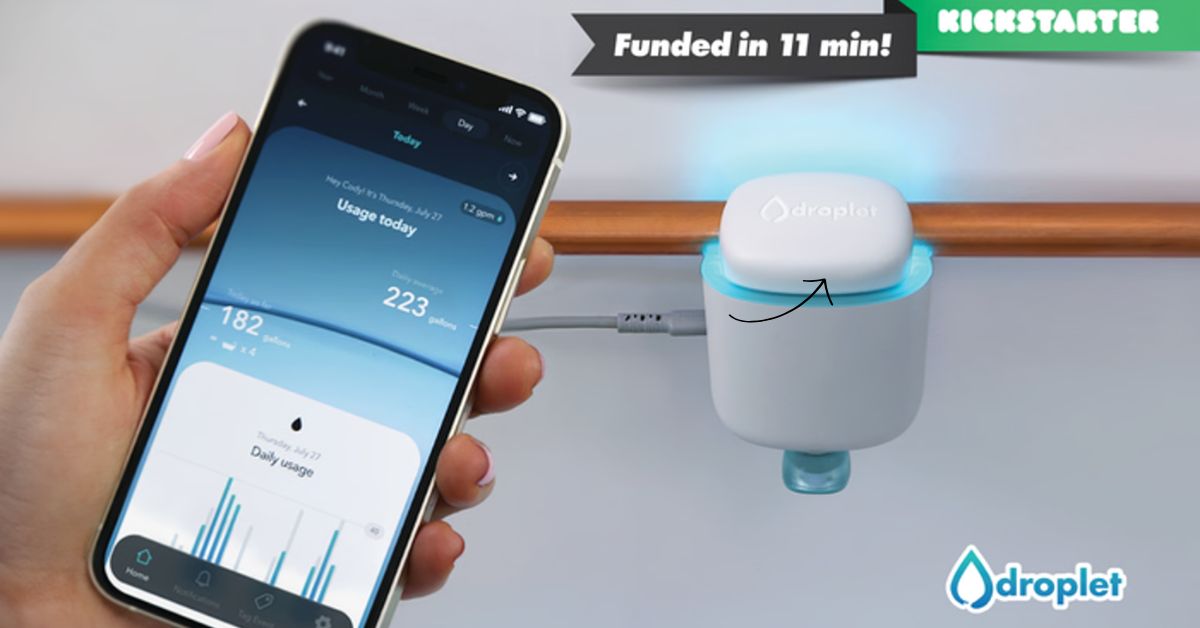
As water scarcity becomes a pressing issue in major Indian cities like Bengaluru, Delhi, and Mumbai, homeowners are increasingly turning to technology to manage their consumption. One of the most talked-about innovations in early 2026 is the Droplet monitor, a smart device designed to track water usage and detect leaks in real-time. Unlike traditional meters that require complicated plumbing work, this new wave of “clamp-on” technology is making water conservation accessible to everyone from high-rise apartment dwellers to independent bungalow owners.
What is a Droplet Monitor?
The Droplet monitor is a non-invasive smart sensor that attaches to the main water supply pipe of a home. It uses advanced ultrasonic technology to measure the flow of water without ever coming into contact with the liquid itself. By sending 50 flow readings per second to a connected mobile app, it provides a highly detailed map of how much water is being used, where it is going, and—most importantly—if any of it is being wasted.
For the average Indian household, where water is often supplied at specific times of the day and stored in overhead tanks, knowing exactly how much remains and how much is lost to faulty flush valves or dripping taps can prevent the common “dry tank” surprise.
Key Features and How It Works
The primary appeal of the Droplet monitor lies in its simplicity. Most Indian homes are not built with smart infrastructure in mind, making “plug-and-play” devices highly desirable.
- Easy Installation: The device simply clips onto the outside of a pipe. There is no need to cut pipes or hire a plumber, which is a significant advantage for those living in rented accommodations.
- Leak Detection: It can detect flow rates as low as a few milliliters per minute. If a pipe bursts or a tap is left running, the system sends an instant alert to the user’s smartphone.
- Usage Breakdown: The AI-powered app learns the “signature” of different appliances. It can distinguish between a washing machine cycle, a shower, and a kitchen tap, allowing users to see exactly which habit is driving up their water bill.
Why This Matters in the Indian Context
In India, water management has traditionally been a manual and often guestimate-driven process. With the rising cost of private water tankers and the implementation of stricter water quotas in various housing societies, the Droplet monitor serves as a financial tool as much as an environmental one.
In cities like Bengaluru, where “Day Zero” fears frequently make headlines, real-time monitoring allows communities to identify systemic leaks in old building pipelines that would otherwise go unnoticed for months. By identifying these leaks early, households can reduce their monthly water costs by up to 20-30%.
Impact and Future Outlook
The introduction of the Droplet monitor coincides with the Indian government’s push for “Smart Cities” and the Jal Jeevan Mission. While the government focuses on infrastructure, private tech like Droplet empowers individual citizens to take charge of their own consumption.
As we move further into 2026, we expect to see these monitors integrated into larger home automation systems. There is also a growing interest from insurance companies in India, who may eventually offer lower premiums for homes equipped with leak detection sensors, as water damage is one of the leading causes of property insurance claims.
Frequently Asked Questions (FAQs)
1. Does the Droplet monitor work with all types of pipes in India?
Yes, the device is designed to work with most common household piping materials, including PVC, CPVC, and copper. However, it is always best to check the specific pipe diameter requirements before purchasing.
2. Does it require an active internet connection?
Yes, the Droplet monitor requires a stable Wi-Fi connection to send real-time data and alerts to your smartphone app.
3. Will it work if I get water from both the municipality and a private tanker?
The monitor tracks the flow through the pipe it is attached to. If all your water passes through one main line into your house or tank, it will monitor the total usage regardless of the source.
4. How does the device get power?
The monitor usually needs to be plugged into a standard power outlet. It is recommended to install it near a power point or use a weather-proof extension if it is placed near an outdoor main valve.
5. Can it shut off the water automatically if a leak is found?
The standard Droplet monitor is a sensing device that provides alerts. While it tells you there is a leak, you would need a separate smart shut-off valve to stop the flow remotely.