The morning ritual of a perfect cup of coffee is no longer confined to the kitchen counter or an expensive café. Across India, a new trend is brewing as “portable coffee makers” become the must-have gadget for 2026. Whether it is a professional working from a high-rise in Bengaluru, a traveler exploring the hills of Himachal, or a student in a hostel, the demand for compact, high-quality brewing solutions is at an all-time high.
This shift is driven by a growing coffee culture where young Indians are moving away from instant powders toward specialized beans and espresso-style extractions. As urban lifestyles become more mobile, the ability to carry a barista-grade machine in a backpack has transformed from a luxury into a daily necessity for many enthusiasts.
What is Driving the Portable Coffee Trend in India?
India’s coffee market has seen a massive transformation over the last few years. While traditional filter coffee remains a staple in the South, the “third-wave” coffee movement—which focuses on the origin and quality of beans—has reached tier-II and tier-III cities. This has created a gap that portable coffee makers are perfectly designed to fill.
Current market data suggests that the portable espresso maker segment is growing at a steady rate of over 10% annually in India. People are looking for alternatives to expensive café visits, which can easily cost a regular drinker upwards of ₹50,000 a year. A portable device offers a one-time investment that pays for itself within months while allowing users to experiment with various Indian specialty beans from regions like Chikmagalur and Araku.
Types of Portable Coffee Makers Available
When looking at the Indian market today, portable coffee makers generally fall into three distinct categories based on how they operate:
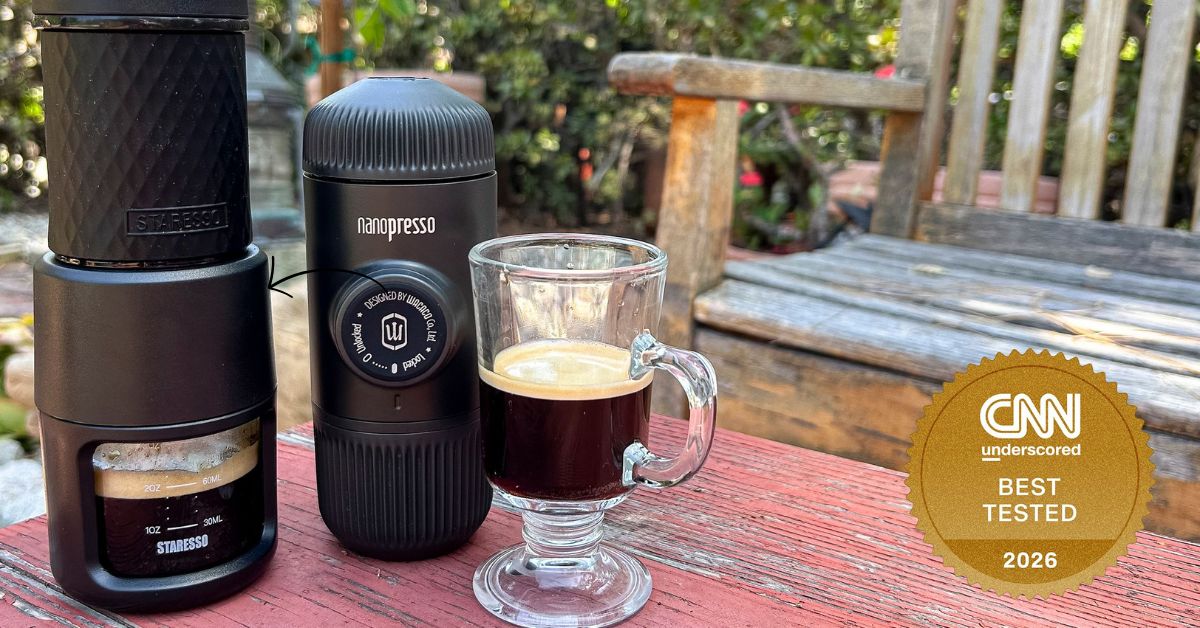
- Manual Espresso Makers: These use hand-operated pumps or levers to create the pressure needed for a thick, crema-topped espresso. Brands like Wacaco (with the Nanopresso and Picopresso models) are highly popular because they don’t require electricity, only hot water.
- Electric and Battery-Operated Machines: A major trend for 2026 is the “self-heating” portable maker. These devices, like the Outin Nano or Fikapresso, come with rechargeable batteries that can boil water and extract coffee at the touch of a button, making them ideal for long car trips or camping where a kettle isn’t available.
- Pressure-Based Brewers: The AeroPress Go remains a dominant force here. It uses a simple plunger system to produce a clean, smooth cup that sits somewhere between a traditional filter coffee and an espresso. It is virtually indestructible, making it a favorite for Indian trekkers.
Why It Matters for the Indian Consumer
For the Indian consumer, “value for money” and “durability” are the two most important factors. Portable coffee makers are appealing because they offer a consistent taste regardless of location. In many parts of India, finding a good café while traveling can be a challenge. Having a portable kit ensures that the quality of the morning brew remains constant.
Furthermore, the rise of remote work and “workations” has pushed professionals to seek tools that fit into a nomadic lifestyle. A compact coffee maker fits easily into a laptop bag, allowing someone to have a high-quality espresso during a break, even in a remote village with limited amenities.
What to Consider Before Buying
If you are looking to join the portable brewing revolution, there are a few key details to keep in mind:
- Water Heating: Does the machine heat the water for you, or do you need to carry a flask of hot water? Manual machines are lighter but require an external heat source.
- Compatibility: Some machines only take ground coffee, while others are compatible with Nespresso-style capsules. Capsule-compatible machines are often preferred by those who want a mess-free experience while traveling.
- Pressure (Bars): For a true espresso, look for a machine that can produce at least 15 to 18 bars of pressure. This ensures the rich flavor and “crema” that coffee lovers enjoy.
Frequently Asked Questions (FAQs)
1. Do portable coffee makers need electricity to work?
It depends on the model. Manual makers like the AeroPress or Wacaco Nanopresso work using hand pressure and do not need electricity. However, you will need to provide hot water. Electric models have built-in batteries to heat the water and pump the coffee.
2. Can I use regular instant coffee powder in these machines?
No, these machines are designed for ground coffee beans or coffee capsules. Using instant coffee powder can clog the filters and potentially damage the internal mechanisms of the device.
3. Are portable coffee makers easy to clean while traveling?
Most modern designs are made with travel in mind and feature “rinse-and-go” components. Manual brewers are generally easier to clean as they have fewer electronic parts, while capsule machines are the most convenient since you simply discard the used pod.
4. Which is the best portable coffee maker for trekking in India?
The AeroPress Go is widely considered the best for trekking because it is made of durable, BPA-free plastic that won’t break in a backpack, is very lightweight, and doubles as its own drinking mug.
5. Is it cheaper to make coffee with a portable machine than buying from a café?
Yes, significantly. While the initial cost of a good portable maker ranges from ₹4,000 to ₹12,000, the cost per cup (using high-quality beans) is usually under ₹20–₹30, compared to ₹200+ at a premium café.