You love your car. You wash the exterior every week and vacuum the interiors until they are spotless. But what about under the hood?
Many car owners in India face this dilemma: The engine bay looks dusty, covered in grease, or splashed with dried mud after a monsoon drive. The local car wash guy suggests a “full engine pressure wash” to make it look brand new. It sounds tempting, but is it safe?
The short answer is: It is risky. While a clean engine looks great, washing it carelessly can lead to expensive repairs.
This guide explains the real side effects of engine washing, why modern cars are more sensitive to water, and how you can keep your engine clean without damaging it.
What Does “Engine Washing” Actually Mean?
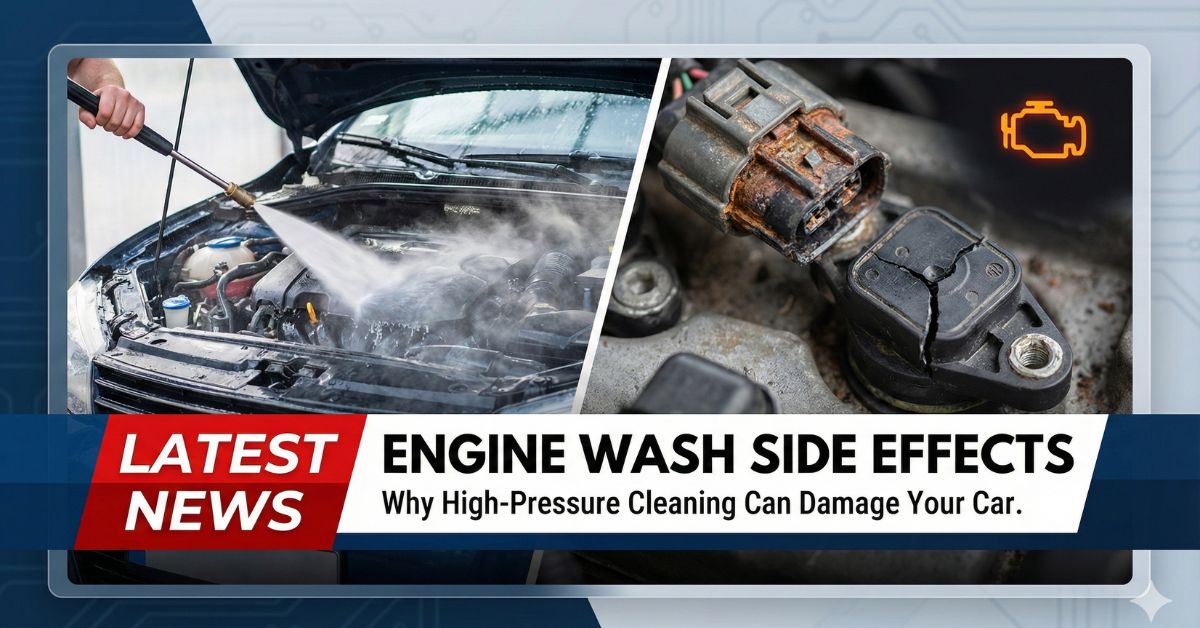
Engine washing usually refers to spraying water (often at high pressure) directly into the engine compartment to remove dirt, oil leaks, and grime. In many Indian service centers, this is done using a pressure washer, sometimes combined with strong degreasing chemicals (diesel wash) or foam.
While engines are built to be tough and somewhat water-resistant (to handle rain splashing from below), they are not waterproof. This distinction is where the trouble begins.
Major Side Effects of Engine Washing
If water gets into the wrong places, the damage can range from a minor annoyance to a car that simply won’t start. Here are the most common side effects:
1. Electrical System Failure
Modern cars—whether it’s a Maruti Swift, Hyundai Creta, or a Honda City—are packed with electronics. Your engine bay houses the ECU (Engine Control Unit), which is the brain of your car, along with fuse boxes, alternators, and miles of wiring.
High-pressure water can force its way past rubber seals and into these sensitive electrical connectors. If water enters the ECU or fuse box, it can cause short circuits. This is the most expensive side effect, often costing tens of thousands of rupees to replace damaged computers.
2. Sensor Damage and Warning Lights
Your engine relies on various sensors (like the MAF sensor, Oxygen sensor, and TPS) to run smoothly. These delicate instruments do not react well to high-pressure water jets.
- The Check Engine Light: This is the most common aftermath of an engine wash. Water moisture interferes with sensor readings, causing the dashboard to light up with warnings.
- Erratic Idling: If water gets into the throttle body sensor, your car’s RPM might fluctuate or the engine might stall unexpectedly.
3. Ignition Issues (Misfiring)
The ignition system, which includes spark plugs and ignition coils, is very vulnerable. If water seeps into the spark plug wells (the deep holes where spark plugs sit), it prevents the spark from reaching the engine cylinder.
- Result: The engine will “misfire.” It will feel jerky, lose power, and sound rough. You might not be able to accelerate properly until the water completely evaporates, which can take days.
4. Corrosion and Rust
In a humid country like India, trapped water is an enemy. Even if you dry the top of the engine, water can pool in hidden crevices, bolt heads, and metal brackets. Over time, this standing water causes rust on nuts, bolts, and pulleys. Corroded electrical grounds can also lead to mysterious electrical gremlins months after the wash.
5. Decreased Battery Life
Spraying water directly on the battery terminals can cause rapid corrosion (that white powdery buildup). This increases resistance and makes it harder for the battery to start the car, eventually shortening its lifespan.
The “Steam Wash” Alternative
Is there a safer way? Yes. Many professional detailing studios in India now offer Steam Cleaning.
Steam uses high temperature and very low water volume. It cuts through grease and oil without flooding the engine bay. Because the steam evaporates almost instantly, the risk of water damage to sensors and wiring is significantly lower compared to a high-pressure water wash.
When Should You Actually Wash Your Engine?
You do not need to wash your engine every time you wash your car. In fact, most manufacturers do not recommend routine pressure washing of the engine bay.
You should only consider cleaning it if:
- There is a heavy buildup of oil and grease that could hide leaks.
- You have driven through deep mud or slush (common during Indian monsoons) that is clogging the radiator or fans.
- You are planning to sell the car and want to increase its resale appeal.
How to Clean Your Engine Safely (The DIY Way)
If you must clean the engine, avoid the high-pressure jet at the service station. Follow these safer steps instead:
- Cold Engine Only: Never wash a hot engine. Cold water on hot metal can crack the engine block.
- Cover Sensitive Parts: Use plastic covers or bags to tightly wrap the Alternator, Fuse Box, Battery, and Air Intake.
- Use Low Pressure: Do not use a pressure washer. A simple garden hose with a gentle spray or a spray bottle is enough.
- Degreaser and Brush: Spray a dedicated engine degreaser on oily parts, let it sit for 2 minutes, and scrub with a soft brush.
- Dry Immediately: Use a microfiber cloth to wipe it down. If you have a leaf blower or compressed air, use it to blow water out of tight crevices.
Conclusion
While a shiny engine looks good, the risks of pressure washing often outweigh the benefits. For most Indian car owners, a simple “dry wipe” with a cloth or a professional steam clean is the best approach. Avoid high-pressure water sprays under the hood to keep your car’s electronics safe and your wallet happy.
Read More : How to Increase Bike Mileage in India
Frequently Asked Questions (FAQs)
1. Does washing the engine increase performance?
No, washing the engine does not directly increase horsepower or mileage. However, cleaning a radiator grill blocked by mud can help the engine cool down better, which helps maintain performance.
2. Can I use diesel to wash my car engine?
It is a common practice in local Indian garages, but it is not recommended. Diesel attracts dust quickly after washing and can be bad for rubber hoses and plastic parts in the long run.
3. What should I do if my car won’t start after an engine wash?
Do not panic. It is likely moisture in the ignition system. Open the hood and let it dry in the sun for a few hours. If you have a compressed air blower, blow air into the spark plug areas. If it still doesn’t start, call a mechanic.
4. How much does engine steam cleaning cost in India?
Professional engine steam detailing usually costs between ₹500 to ₹1,500, depending on the car size and the city.
5. Will engine washing void my warranty?
It might. If a service center proves that an electrical failure was caused by external water damage (due to pressure washing), they may refuse to cover the repairs under warranty.