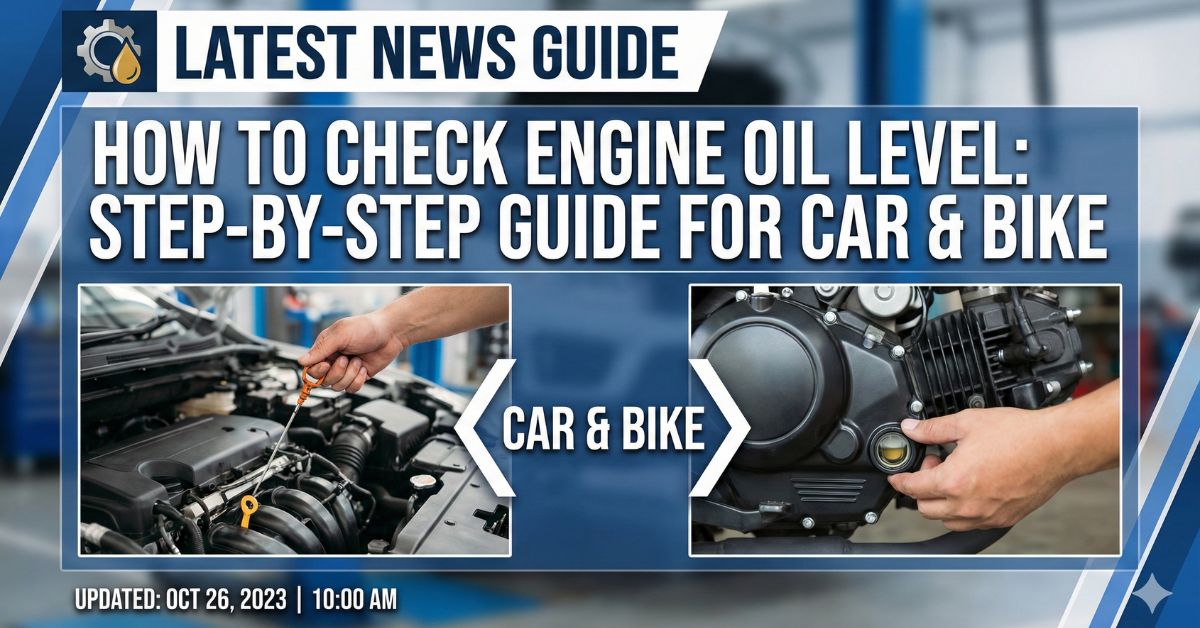
Just as we all know that blood is essential for the human body and without it our body cannot function properly, in the same way engine oil works like blood for a car or bike engine. It plays a vital role in maintaining all the engine parts and helps keep the engine cool during operation.
I also had this discussion for my own car because learning about vehicle maintenance is always a good thing. Friends, the parts of a vehicle’s engine are quite expensive, and engine oil helps prevent these parts from rubbing against each other, reducing friction and protecting the engine from damage.
In India, our vehicles go through a lot—high temperatures in summer, dusty roads, and heavy bumper-to-bumper traffic. These conditions can burn up engine oil faster than you think. If you drive with low oil, you risk seizing your engine, which can cost lakhs to fix.
The good news? Checking your engine oil takes less than 5 minutes and costs nothing. Here is a simple, expert guide on how to do it correctly.
Why You Must Check Your Oil Regularly
Many drivers only check their oil when the car goes for a service. This is a mistake. In India, it is recommended to check your engine oil every 2 weeks or before going on a long highway trip.
- Prevent Overheating: Oil absorbs heat. Low oil means your engine gets hotter, faster.
- Save Money: Catching low oil early prevents permanent engine damage.
- Better Mileage: An engine with the right amount of clean oil runs smoother and uses less fuel.
When is the Best Time to Check?
There is often confusion about whether to check oil when the engine is hot or cold.
For most modern cars in India (like Maruti Suzuki, Hyundai, Tata), the most accurate reading comes when the engine is warm but turned off.
- Drive your car for a few minutes to warm it up.
- Park the car and turn the engine OFF.
- Wait for 5 to 10 minutes. This allows the oil to drain back into the pan (sump) so you get a correct measurement.
Note: If you check it immediately after driving, the level might look low because the oil is still stuck in the upper parts of the engine.
Step-by-Step Guide: How to Check Car Engine Oil
Follow these simple steps. You will need a clean rag or a paper towel.
Step 1: Park on a Flat Surface
Always park your car on level ground. If your car is parked on a slope (uphill or downhill), the oil will shift to one side, and the dipstick will show you a wrong reading.
Step 2: Locate the Dipstick
Open your car’s bonnet (hood). Look for a small handle sticking out of the engine block. It is usually yellow, orange, or red and has a loop for your finger. It might even have an oil can symbol on it.
Step 3: Pull, Wipe, and Re-insert
- Pull the dipstick all the way out.
- Do not read the level yet! The stick will be splashed with oil from the engine running.
- Wipe the stick clean with your rag or paper towel.
- Push the clean dipstick all the way back into the tube until it clicks or stops.
Step 4: Pull and Read
Pull the dipstick out again gently. Now, look at the tip of the stick. You will see two markings:
- F (Full) or Max
- L (Low) or Min
- (Sometimes these are just two dots or a cross-hatched area).
The Result:
- If the oil is between the two marks: You are safe. No action needed.
- If the oil is below the bottom mark: Your oil is critically low. You must top it up immediately.
- If the oil is above the top mark: You have too much oil. This is also bad and can cause leaks. You may need to drain some out.
What Does the Oil Color Mean?
While checking the level, look at the color of the oil on the rag.
- Golden or Amber: This is fresh, healthy oil.
- Dark Brown: This is normal for used oil. It is still doing its job.
- Black and Thick (Sludge): The oil is old and dirty. It’s time for an oil change service.
- Milky or Creamy: This is dangerous. It means coolant (water) has mixed with the oil, likely due to a blown gasket. Do not drive; tow the car to a mechanic.
How to Check Bike Engine Oil (Two-Wheelers)
Checking oil on a bike is slightly different because many bikes in India (like Royal Enfield or Bajaj) have a Sight Glass instead of a dipstick.
Method A: Sight Glass (Window)
- Park the bike on the Center Stand on flat ground.
- Look at the small glass window on the right side of the engine.
- The oil level should be between the Upper and Lower lines marked on the glass.
Method B: Dipstick
- Unscrew the oil cap/dipstick.
- Wipe it clean.
- Important: Most bike manuals say do not screw it back in to check the level. Just rest the threads on the opening. (Check your specific bike manual to be sure).
- Pull it out and check the level marks.
Read More : Car Mileage With AC On
Conclusion
So friends, I hope you liked today’s topic, which is based on my real-life experience. If you properly maintain and take care of the engine oil, your car or bike will automatically remain in good condition, and you will face fewer problems in the long run. This also allows you to go on tours or long drives without any worries.
That’s all for today’s information. Thank you for reading.
Frequently Asked Questions (FAQs)
Q: Can I use any oil to top up my car?
No. You must use the grade recommended by your manufacturer (e.g., 5W30, 10W40). Using the wrong “thickness” (viscosity) can damage your engine. Check your owner’s manual.
Q: My dashboard has an oil light. Isn’t that enough?
No. The oil pressure light usually turns on only when the level is critically low and damage has already started. The manual dipstick check is the only way to be proactive.
Q: How often should I change my engine oil?
For most cars in India, it is every 10,000 km or 1 year, whichever is earlier. However, if you drive in heavy city traffic daily, you might need to change it sooner (around 7,500 km).
Q: Is it okay to check oil in the morning when the engine is cold?
Yes, it is safe to check a cold engine. Just remember that oil expands when hot. So, a cold reading might show the level slightly lower than a hot reading. As long as it is within the safe zone, you are fine.
Q: What happens if I overfill the oil?
Too much oil causes air bubbles (foam) in the oil. Foamy oil cannot lubricate the engine properly and can blow out oil seals. Never fill above the “Max” line.