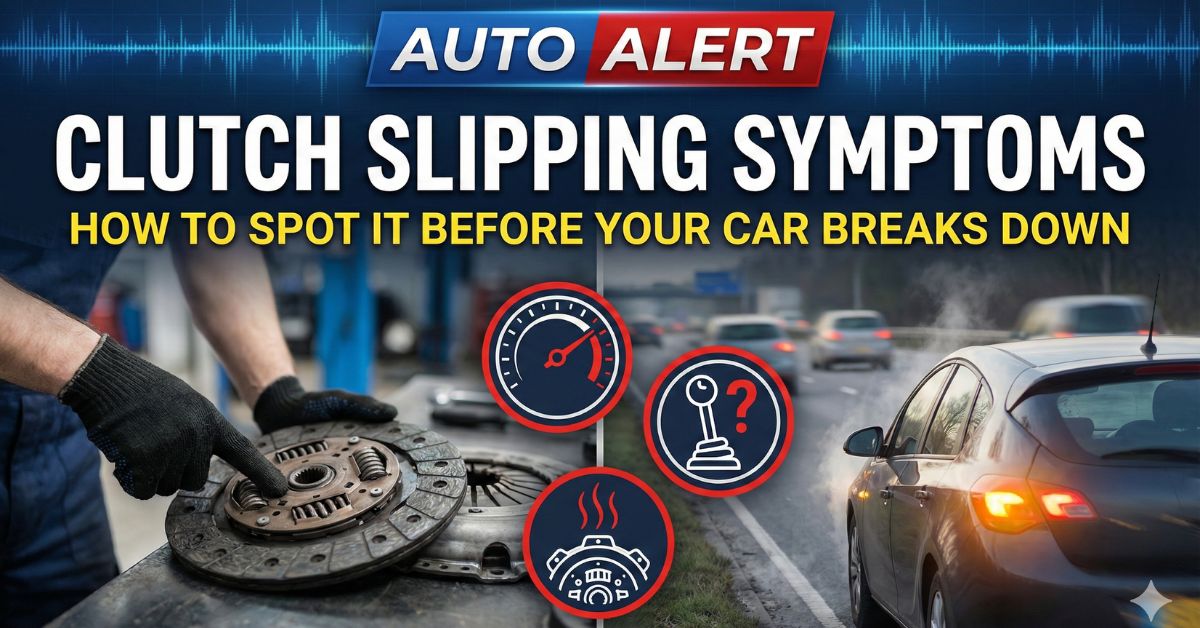
If you drive a manual car or bike in India, you know the struggle: bumper-to-bumper traffic, constant gear shifts, and half-clutch driving. While Indian drivers are experts at managing chaos on the road, our vehicles—especially the clutch system—take a heavy beating.
A failing clutch doesn’t usually break suddenly without warning. It gives you signs. Ignoring them can lead to a breakdown in the middle of a busy highway or, worse, a massive repair bill that includes a damaged flywheel or gearbox.
Here is a complete guide to spotting the symptoms of clutch slipping before it fails, why it happens, and what it costs to fix in India.
What Does “Clutch Slipping” Actually Mean?
In simple terms, a “slipping” clutch means the power from your engine isn’t reaching your wheels 100%.
When your clutch is healthy, it locks the engine and gearbox together tightly. When it slips, they fail to grip each other properly. The engine spins fast, but the car struggles to move forward. It’s like running on ice—lots of effort, but very little movement.
Top 5 Warning Signs Your Clutch Is About to Fail
1. High RPMs but Low Speed (The “Rev Rise” Effect)
This is the most common symptom. You press the accelerator to overtake a bus or truck, and you hear the engine roar (RPMs go up), but your car doesn’t speed up instantly.
- The feeling: The car feels “lazy” or heavy.
- Why it happens: The friction material on the clutch plate is worn out, so it slides against the flywheel instead of grabbing it.
2. A Burning Rubber Smell
Have you ever noticed a sharp, acrid smell after driving up a steep flyover or in heavy jam-packed traffic? That smell is often your clutch “cooking.”
- The cause: Constant friction generates excessive heat, burning the facing of the clutch plate. If you smell this, the damage is already happening.
3. Sticky or “Spongy” Clutch Pedal
The pedal feel changes before failure.
- Spongy: The pedal feels too soft or loose, like stepping on a marshmallow.
- Sticky: The pedal doesn’t come back up quickly after you press it.
- Hard: Sometimes, the pedal becomes extremely hard to press, which is common in older diesel cars like the Swift or Bolero.
4. Gear Shifting Becomes Difficult
If you have to fight the gear stick to put it into 1st or Reverse gear, your clutch isn’t disengaging fully. You might hear a “grinding” noise (krr-krr sound) when changing gears. This is dangerous as it can damage your expensive gearbox.
5. Shuddering or Juddering on Pickup
When you release the clutch in 1st gear to start moving, the car shouldn’t vibrate violently. If the car shakes or “judders” before moving, the clutch plate grip is uneven or the pressure plate is damaged.
Why Do Clutches Fail Early in India?
Indian driving conditions are unique, and they are the biggest enemy of a clutch plate.
- Riding the Clutch: Many drivers rest their left foot on the clutch pedal while driving. Even slight pressure keeps the clutch partially engaged, wearing it out miles before its time.
- Traffic Jams: In cities like Bengaluru, Delhi, or Mumbai, you shift gears hundreds of times an hour. This “stop-start” cycle kills clutches faster.
- Half-Clutch Driving: Using the half-clutch method to hold the car on a slope instead of using the handbrake burns the friction material rapidly.
How to Check If Your Clutch Is Slipping (Simple Test)
- Step 1: Find an empty, safe road.
- Step 2: Start your car and put it into a higher gear (like 3rd or 4th) while standing still.
- Step 3: Slowly release the clutch while giving a little accelerator.
- Result:
- Healthy Clutch: The engine should stall (die) immediately.
- Slipping Clutch: The engine keeps running and revving, trying to move the car. This means the clutch is gone.
(Note: Do this test only once to confirm. Doing it repeatedly will damage the clutch further.)
Estimated Repair Costs in India (2025-26)
Replacing a clutch usually involves changing the Clutch Kit (Clutch Plate + Pressure Plate + Release Bearing). Prices vary by vehicle type and city.
| Vehicle Type | Estimated Cost (Parts + Labour) |
| Two-Wheeler (100-150cc) | ₹1,200 – ₹2,500 |
| Hatchback (e.g., Alto, Swift) | ₹5,000 – ₹9,000 |
| Sedan (e.g., City, Verna) | ₹8,000 – ₹15,000 |
| SUV (e.g., Scorpio, Creta) | ₹12,000 – ₹22,000 |
Note: If you ignore the slip for too long, you might damage the Flywheel, which can cost an extra ₹5,000 to ₹15,000.
Read More : Why Your New Car Has Low Pickup
Frequently Asked Questions (FAQs)
Q1: Is it safe to drive with a slipping clutch?
It is generally not recommended. Mechanics in India usually suggest replacing the full clutch assembly (kit) because if you change just one part, the old parts will cause the new one to wear out quickly.
Q2: Can I just repair the clutch plate instead of replacing it?
It is generally not recommended. Mechanics in India usually suggest replacing the full clutch assembly (kit) because if you change just one part, the old parts will cause the new one to wear out quickly.
Q3: How many kilometers does a clutch last in India?
In heavy city traffic, a clutch typically lasts between 40,000 km to 70,000 km. With good highway driving, it can last over 1,00,000 km.
Q4: Does “riding the clutch” really damage it?
Yes, significantly. Resting your foot on the pedal causes constant friction. Always use the “dead pedal” (the resting space to the left) if your car has one.
Q5: Why is my mileage dropping?
A slipping clutch wastes engine power. Since the power isn’t reaching the wheels efficiently, the engine works harder, burning more fuel for the same speed.