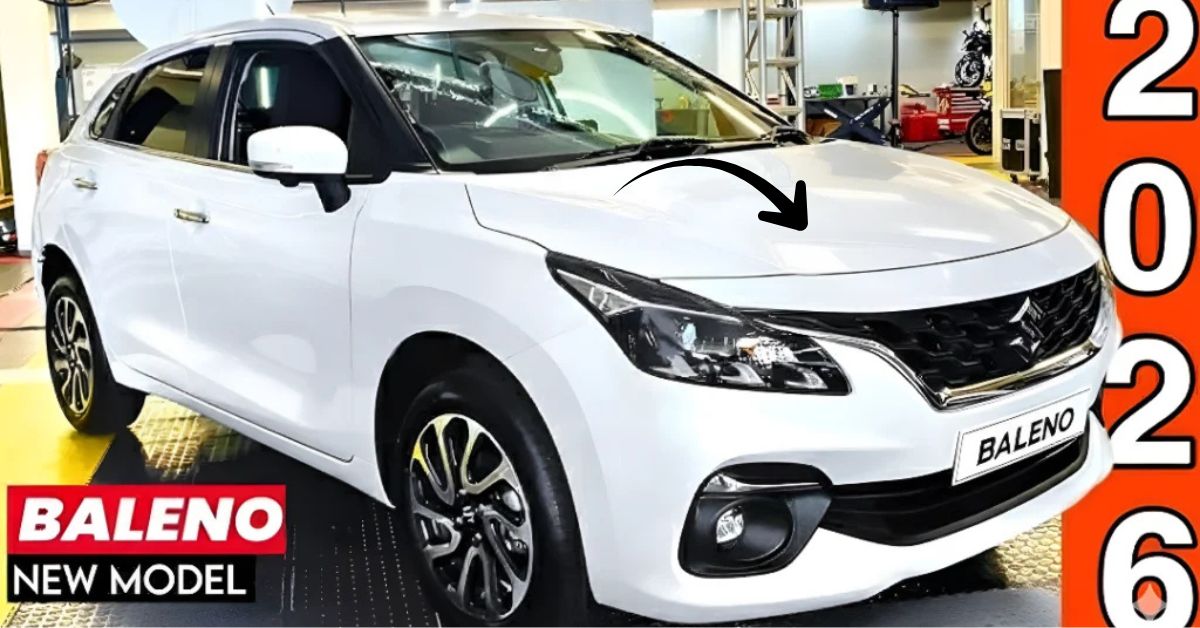
If you live in India and haven’t heard of the Maruti Suzuki Baleno, you probably haven’t been on the road lately. Since its launch, this premium hatchback has dominated sales charts, often trading punches with its sibling, the Swift, and rivals like the Hyundai i20 and Tata Altroz.
But why is the Baleno so popular? Is it just the mileage, or is there more to the story?
In this detailed review, we cut through the brochure jargon. Whether you are a first-time car buyer, upgrading from a smaller car, or looking for a reliable daily commuter, this guide covers everything—real-world mileage, service costs, safety concerns, and hidden pros and cons—to help you decide if the Baleno deserves a spot in your garage.
1. Design and First Impressions: Premium Meets Practicality
The latest generation of the Baleno (often called the “New Age Baleno”) has matured significantly. It no longer looks like a bubbly, round hatchback.
Exterior Highlights
- The “Crafted Futurism” Grille: The front fascia is wider with a honeycomb pattern that gives it a planted, aggressive stance.
- LED Lighting: The “NEXre” LED DRLs (Daytime Running Lights) are a signature touch. If you buy the Zeta or Alpha variants, you get crisp LED projector headlamps that offer excellent night-time visibility.
- Build Quality Note: While the sheet metal feels slightly sturdier than the 2017–2018 models, it is still lightweight compared to a Tata Altroz. If you press the bonnet or door panels hard with your thumb, you might feel some flex. This weight reduction helps mileage but is a point of debate among enthusiasts.
Interior & Cabin Experience
Step inside, and the change is drastic. The cabin feels modern with a dual-tone (Black & Blue) dashboard.
- Touchscreen: The dashboard is dominated by a floating 9-inch SmartPlay Pro+ infotainment system (in Alpha trim). It’s responsive, supports Wireless Android Auto & Apple CarPlay, and is arguably the best in this segment.
- The “Wow” Factor: Features like the Heads-Up Display (HUD) make you feel like you are in a much more expensive car. It projects your speed and gear indicators onto a small glass pane so you don’t have to take your eyes off the road.
2. Engine Performance: Petrol vs. CNG
Maruti has ditched the diesel engine long ago. The Baleno now runs on the highly refined 1.2L K-Series Dual Jet, Dual VVT Engine.+1
The Petrol Drive (Manual & AMT)
- Power: 88.5 bhp | Torque: 113 Nm
- City Driving: This engine is a gem for the city. It is silent at idle—sometimes you can’t tell if the car is on! The low-end torque is good, meaning you don’t have to change gears frequently in traffic.
- AMT (AGS) Behavior: The Automatic (AGS) version is convenient but not sporty. You will feel a slight “head-nod” or pause when the car shifts from 1st to 2nd gear. However, for bumper-to-bumper city traffic, it is a blessing.
The CNG Option (S-CNG)
- Power: ~76 bhp (in CNG mode)
- The Compromise: You lose boot space. The CNG cylinder eats up most of the luggage area, so it’s strictly for city usage or short trips where you don’t carry heavy suitcases.
- Performance: The switch between petrol and CNG is seamless. You won’t feel a massive power drop unless you are climbing a steep flyover with five passengers.
3. Real-World Mileage: The Truth
Maruti claims huge numbers, but what does the Baleno deliver on Indian roads with AC on?
| Driving Condition | Petrol Manual (Real) | Petrol AMT (Real) | CNG (Real) |
| Heavy City Traffic | 14 – 16 km/l | 13 – 15 km/l | 22 – 24 km/kg |
| City (Free Flow) | 17 – 19 km/l | 16 – 18 km/l | 26 – 28 km/kg |
| Highway (80-90 km/h) | 21 – 23 km/l | 22 – 24 km/l | 30+ km/kg |
Pro Tip: To get maximum mileage in the AMT version, lift your foot slightly off the accelerator just before the car shifts gears. This smoothes the shift and saves fuel.
4. Ride Quality and Handling
The suspension of the new Baleno has been re-tuned.
- Ride Comfort: It absorbs small potholes and bumps much better than the old model. It feels more “mature” and settled.
- High-Speed Stability: Up to 100–110 km/h, the car feels confident. Push it beyond 120 km/h, and the lightweight steering might make you feel a bit nervous. It is not a corner-carving machine; it is a comfortable family cruiser.
- Ground Clearance: At roughly 170mm (unladen), it handles most speed breakers well. However, if you have 5 heavy adults sitting, you need to be careful over nasty speed bumps to avoid scraping the underbelly.
5. Safety: The Elephant in the Room
Safety has been Maruti’s weak point, but they are trying to fix it.
- Airbags: You now get 6 Airbags (Driver, Co-driver, Side, and Curtain) in the Zeta and Alpha variants. Standard variants get dual airbags.+1
- Structural Safety: The Baleno recently scored 4 Stars in the Bharat NCAP crash tests (Adult Occupancy). This is a massive improvement over the older models.
- Active Safety: Electronic Stability Program (ESP) and Hill Hold Assist are standard across almost all variants now. This prevents the car from rolling back on slopes—a lifesaver in mall parking ramps!
6. Maintenance & Service Costs
This is where the Baleno shines. It is unmatched in terms of “peace of mind.”
- Service Interval: Every 10,000 km or 1 Year.
- Average Cost:
- 1st Year: ~₹2,500 – ₹3,500 (Labor is free)
- 3rd Year onwards: ~₹5,000 – ₹7,000 (Major service)
- Spare Parts: Parts are available everywhere, from authorized Nexa service centers to your local mechanic, and they are significantly cheaper than Honda or Hyundai parts.
7. Pros and Cons: A Quick Snapshot
| Why You Should Buy (Pros) | Why You Might Skip (Cons) |
| Best-in-class Mileage: Hard to beat 22+ kmpl on petrol. | Build Feel: Doors don’t have that heavy “thud” sound like European cars. |
| Space: Rear seat legroom is massive; 3 adults can sit relatively comfortably. | No Diesel Engine: High-mileage highway runners might miss the diesel torque. |
| Feature Loaded: HUD, 360-Camera, UV Cut glasses are segment-firsts. | AMT Lag: The automatic gearbox is not as smooth as the i20’s CVT or DCT. |
| Resale Value: You will get a great price even after 5 years of use. | Steering Feedback: The steering doesn’t self-center aggressively; you have to pull it back slightly after U-turns. |
8. Maintenance Tips for Baleno Owners
- AMT Care: Never use your left foot on the brake in an automatic car. Also, shift to ‘N’ (Neutral) if you are stopped at a red light for more than 30 seconds to save clutch life.
- Tire Pressure: For the best balance of comfort and mileage, maintain 31-32 PSI in city conditions.
- AC Filter: Maruti ACs are powerful, but the cabin filter gets clogged easily in dusty Indian cities. Clean it every 5,000 km for effective cooling.
9. Conclusion: Should You Buy It?
The Maruti Baleno is not built for racing enthusiasts who want corner-carving precision. It is built for the smart Indian family.
Read More : Buying a Skoda Superb?
It ticks the boxes that actually matter for 90% of buyers: it rarely breaks down, it sips fuel like a miser, it has enough space for parents and kids, and it has enough tech to show off to neighbors.
- Buy it if: You want a hassle-free car for city commutes, love high mileage, and want excellent resale value.
- Look elsewhere if: You want a “tank-like” heavy build quality (Tata Altroz) or a sporty driving experience with a turbo engine (Hyundai i20 N Line).
Final Verdict: The Baleno remains the undisputed king of practical hatchbacks. For most middle-class families, this is the safest bet your money can buy.
10. FAQ Section
Q1: Is the Baleno safe for highway driving?
A: Yes, the new model feels stable up to 100-110 km/h and comes with ABS, EBD, and up to 6 airbags. However, it is a lightweight car, so drive responsibly. For purely highway usage, a heavier car like a customized SUV might feel more planted in crosswinds, but the Baleno is perfectly capable.
Q2: Which variant is the most Value for Money (VFM)?
A: The Zeta variant. It offers 6 airbags, the rear AC vent, alloy wheels, and the touchscreen system. You miss out on the HUD and 360 camera (which are in Alpha), but you save nearly ₹1 Lakh.
Q3: Can I install CNG in the petrol variant later?
A: Yes, you can install an aftermarket CNG kit. However, this voids the engine warranty. It is highly recommended to buy the factory-fitted S-CNG version for safety and better tuning.
Q4: Is the ground clearance enough for village roads?
A: It is adequate (approx. 170mm). For normal potholed roads, it is fine. If you frequent off-road terrain or very deep ruts, a compact SUV like the Brezza or Fronx (which is based on the Baleno) would be better.
Q5: Does the Baleno have a sunroof?
A: No. As of the current 2024-25 lineup, Maruti does not offer a sunroof in the Baleno.