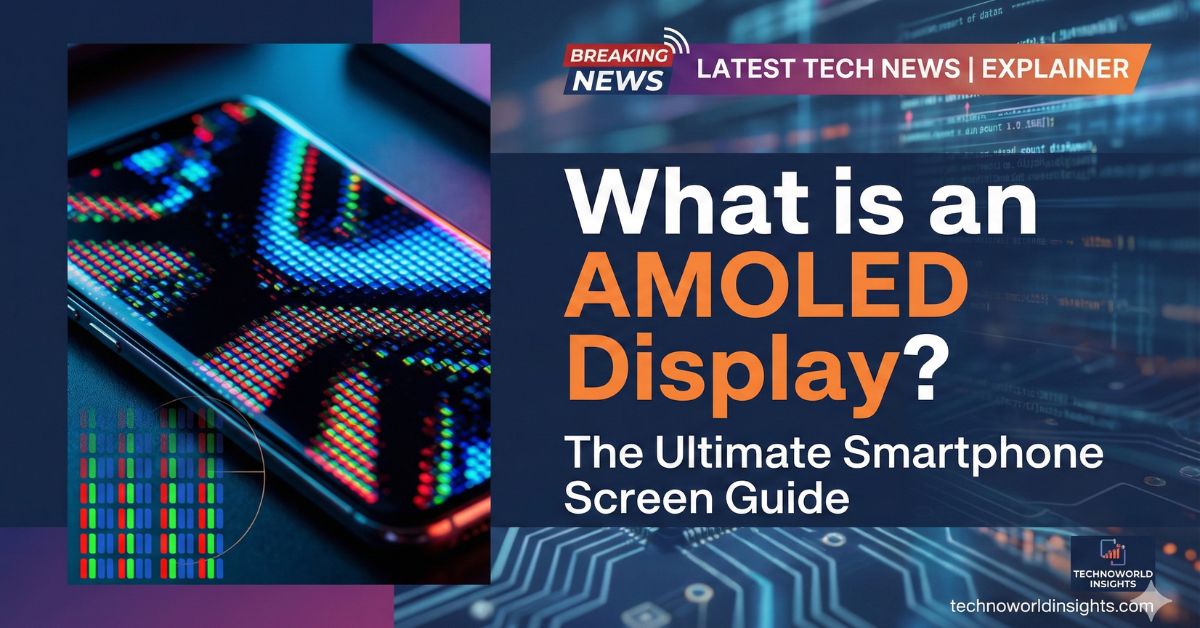
If you are planning to buy a new smartphone in India, you have probably noticed mobile brands highlighting their screen technology. Among the various features, the display type is one of the most important factors that decide your viewing experience and battery life. You will often see the term AMOLED proudly printed on the specification sheets of mid-range and premium phones. But what exactly does this mean, and is it worth your money?
This article will explain everything you need to know about AMOLED screens in simple English. We will cover how the technology works, why it is so popular in the Indian smartphone market, how it compares to older screen types, and what you should consider before making your next purchase.
What is an AMOLED Display?
AMOLED stands for Active Matrix Organic Light Emitting Diode. It is a highly advanced screen technology used in modern smartphones, smartwatches, and premium televisions. To understand it simply, you can break the name into two main parts: OLED and Active Matrix.
The OLED part means that the screen is made of special organic materials that glow when electricity passes through them. The Active Matrix part acts like a smart switchboard behind the screen. It uses a thin layer of transistors to control each tiny dot of light, known as a pixel, individually. Because of this smart control system, AMOLED screens can change colors instantly and deliver extremely sharp images.
How Does the Technology Work?
To understand why this screen is special, it helps to know how it creates the pictures you see. Every image on your phone is made up of millions of tiny pixels. In an AMOLED screen, each of these pixels produces its own light.
When your phone needs to show a bright and colorful picture, the smart switchboard sends electricity to the exact pixels needed, lighting up the red, green, and blue components inside them. The most impressive part happens when the screen needs to show the color black. Instead of trying to create a black color, the screen simply turns off the electricity to those specific pixels. Since the pixels are completely turned off, they emit no light at all. This creates a true, deep black color that looks incredibly natural and rich.
Why AMOLED is Highly Popular in India
Indian consumers consume a massive amount of video content and play high-graphic games on their mobile phones. This makes the quality of the screen very important. AMOLED technology offers several major benefits that improve everyday smartphone usage.
Stunning Picture Quality and True Blacks
Because the pixels turn off completely to show black, the contrast between dark and light areas is perfect. This makes movies, photos, and games look vibrant, lifelike, and highly detailed.
Better Battery Life with Dark Mode
Battery backup is a top priority for smartphone users in India. Since an AMOLED screen turns off individual pixels to show black, it uses zero battery power in those dark areas. If you use your phone in Dark Mode, you can save a significant amount of battery life throughout the day.
Faster Touch Response for Gaming
The active matrix technology allows the screen to react to your touch almost instantly. This faster response time means smoother scrolling through social media and a much better experience when playing fast-paced multiplayer games.
Support for Modern Phone Features
Without this technology, many of the futuristic features we love today would not be possible. Because the screen panels are very thin and flexible, they allow mobile brands to include in-display fingerprint scanners. They also consume so little power that phones can keep the Always-On Display running to show the time and notifications without draining the battery.
AMOLED vs LCD: What is the Difference?
If you are comparing an AMOLED phone with a more affordable LCD phone, the difference comes down to the light source.
An LCD, which stands for Liquid Crystal Display, relies on a large backlight panel placed behind the screen. This backlight is always turned on, even when you are looking at a dark image. Because the light is constantly pushing through the screen, the color black often looks a bit grey or washed out. Furthermore, because the backlight is always running, LCD screens usually drain the battery faster than their modern counterparts.
While LCD screens are cheaper to repair and are perfectly fine for budget phones, AMOLED screens provide a much richer, smoother, and battery-friendly experience.
Are There Any Drawbacks?
While the technology is brilliant, it does have a few minor disadvantages. The manufacturing process is complex, which makes these screens more expensive. If you accidentally drop your phone and break the display, replacing an AMOLED panel will cost significantly more than replacing an LCD panel.
There is also a slight risk of screen burn-in. If a static image, like a network logo or a battery icon, is displayed at maximum brightness for many hours every single day, a faint shadow of that image might become permanently stuck on the screen. However, smartphone brands now use clever software tricks to prevent this from happening, so it is rarely a problem for normal users today.
What Happens Next: The Future of Screens
The display industry is moving fast. Companies like Samsung and Apple are constantly upgrading this technology. You will now see terms like Super AMOLED or Dynamic AMOLED on newer phones. These are simply upgraded versions that offer even brighter screens for outdoor sunlight use and better protection against eye strain by reducing harmful blue light.
Because the organic plastic layers inside the screen are flexible, this technology is also the exact reason we now have folding and bending smartphones. As manufacturing becomes cheaper in the future, we will likely see these stunning screens replace older displays entirely, even in the most affordable budget smartphones.
Frequently Asked Questions (FAQs)
Does an AMOLED display consume more battery?
No, it actually consumes less battery when viewing dark content. Because it can turn off individual pixels completely, using dark mode or dark wallpapers will help your phone battery last much longer.
Is AMOLED better for the eyes?
Yes, generally it is better for your eyes. Modern versions of this screen emit significantly less harmful blue light compared to older screens, which helps reduce eye strain when you use your phone at night.
Can I use my phone under direct sunlight?
Yes. While older versions struggled slightly in bright outdoor light, modern smartphones now feature enhanced peak brightness levels that make the screen perfectly clear and easy to read even under the harsh Indian summer sun.
Why are AMOLED screen repairs so expensive?
The technology involves placing millions of microscopic light-emitting diodes and a complex transistor layer into an ultra-thin panel. The high cost of these advanced materials and the difficult manufacturing process makes the replacement parts expensive.