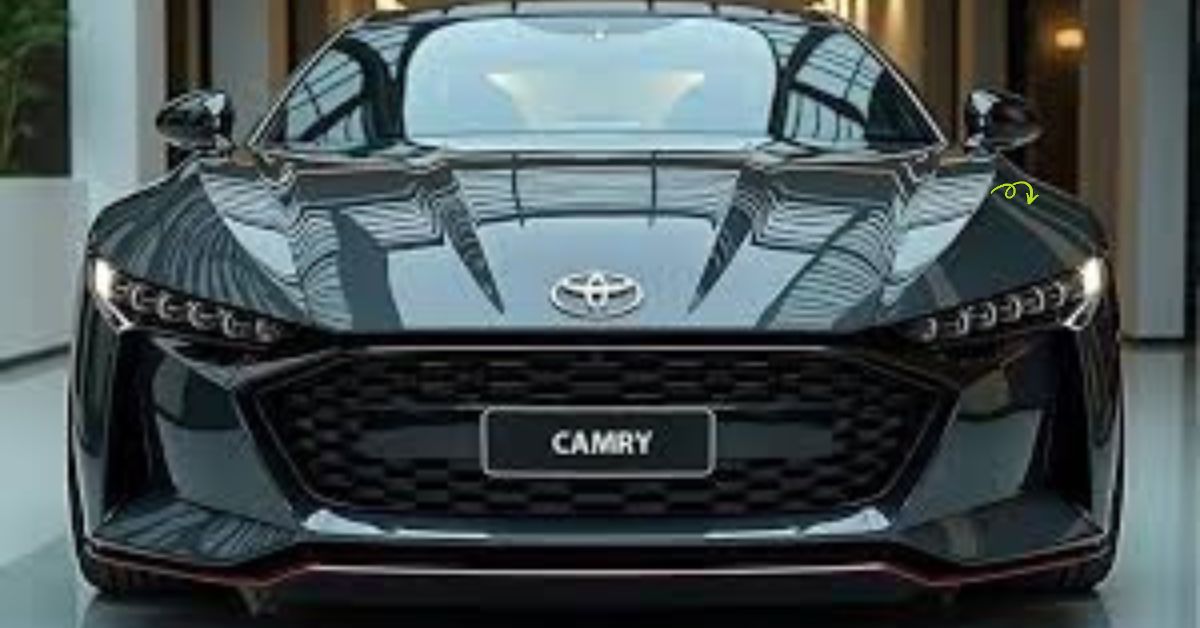
Toyota Kirloskar Motor has officially introduced the ninth-generation Camry in India, reinforcing its commitment to the premium sedan market. This latest iteration, often referred to as the XV80, brings a significant overhaul in design, a more powerful hybrid engine, and a suite of advanced safety features. As one of the few strong-hybrid sedans in its segment, the new Camry aims to offer a “Lexus-like” experience at a more accessible price point, targeting corporate professionals and luxury car buyers who prioritize comfort and fuel efficiency.
Pricing and Variants in India
The new Toyota Camry is primarily offered in a single, fully-loaded variant known as the Elegance. Recently, Toyota also introduced a sportier Sprint Edition, which features cosmetic enhancements like blacked-out elements and a rear spoiler to appeal to younger buyers.
Prices for the 2025-2026 Toyota Camry start at ₹48 lakh (ex-showroom). However, depending on the state and local taxes, the on-road price can vary significantly. In major cities like Mumbai and Bangalore, the on-road cost can exceed ₹55-60 lakh due to registration and insurance charges. Despite its premium positioning, it remains a competitive alternative to entry-level luxury sedans from German brands.
Design and Exterior Overhaul
The most striking change in the new Camry is its design language, which borrows heavily from the new-age Toyota Prius and Crown sold internationally. The front fascia is now much sharper, featuring a “hammerhead” nose and sleek C-shaped LED daytime running lights (DRLs). The grille is larger and placed lower on the bumper, giving the car a more aggressive and grounded stance.
While the side profile retains the familiar executive sedan silhouette, the rear has been updated with new wraparound LED taillights and a cleaner trunk design. The car sits on 18-inch multi-spoke alloy wheels that complement its sophisticated look. For those seeking more flair, the Sprint Edition adds a dual-tone finish with matte black accents on the roof and bonnet.
Interior Luxury and Tech Features
Inside, the Camry has moved away from the old-school layout to a modern, minimalist cockpit. The dashboard is dominated by a 12.3-inch touchscreen infotainment system that supports wireless Apple CarPlay and Android Auto. This is paired with a fully digital 12.3-inch instrument cluster for the driver and a convenient Head-Up Display (HUD).
Toyota has focused heavily on rear-seat comfort, which has always been the Camry’s USP in India. The rear armrest features a touch-control panel that allows passengers to adjust the climate control, recline the rear seats, and operate the sunshades. Other premium features include:
- A 9-speaker JBL premium audio system.
- Three-zone automatic climate control with nanoe™ X air purification.
- Ventilated front seats with 10-way power adjustment and memory function.
- A wireless smartphone charger and multiple USB-C ports.
Engine Performance and Fuel Efficiency
Under the hood, the new Camry continues to use a 2.5-litre, four-cylinder petrol engine paired with a strong-hybrid system. This 5th-generation hybrid setup delivers a combined power output of 227 bhp, which is roughly 12 bhp more than the previous model. The engine is mated to an e-CVT (Electronic Continuously Variable Transmission) that ensures a smooth and quiet driving experience.
One of the biggest advantages of this hybrid system is its efficiency. The new Camry boasts a claimed ARAI mileage of 25.49 kmpl, an impressive figure for a sedan of this size. Drivers can choose between three modes—Eco, Normal, and Sport—allowing the car to operate purely on electric power (EV mode) during low-speed city crawls, provided the battery has sufficient charge.
Safety and Technology
For the first time in India, the Camry comes equipped with the Toyota Safety Sense (ADAS) suite. This includes advanced driver-assistance features such as:
- Pre-collision warning and emergency braking.
- Dynamic Radar Cruise Control (Adaptive Cruise Control).
- Lane Departure Alert and Lane Tracing Assist.
- Automatic High Beam.
Passive safety is handled by nine airbags as standard, along with electronic stability control, traction control, and a 360-degree surround-view camera to help navigate tight urban spaces.
Why the New Camry Matters in India
The Indian luxury sedan market is currently dominated by SUVs, yet the Camry has carved out a niche for itself. It appeals to buyers who want the reliability of a Toyota with the comfort of a limousine. Its strong-hybrid nature also makes it “future-ready” in the face of stricter emission norms, offering a bridge between traditional petrol cars and full electric vehicles (EVs).
Read More : Toyota Grand Land Cruiser
With the exit of competitors like the Honda Accord and the limited availability of the Skoda Superb, the Camry stands as the go-to choice for those who want a chauffeur-driven experience without the high maintenance costs associated with European luxury brands.
Frequently Asked Questions (FAQs)
1. What is the price of the new Toyota Camry in India?
The new Toyota Camry is priced starting at ₹48 lakh (ex-showroom). Depending on the city and taxes, the on-road price can range between ₹54 lakh and ₹61 lakh.
2. What is the mileage of the Toyota Camry Hybrid?
The new Camry offers a class-leading ARAI-certified mileage of 25.49 kmpl, making it one of the most fuel-efficient luxury sedans in India.
3. Does the Indian Camry have ADAS features?
Yes, the latest generation of the Camry in India comes with Toyota Safety Sense, which includes features like Adaptive Cruise Control, Lane Departure Alert, and Pre-collision systems.
4. How many variants are available for the Camry in India?
The Camry is primarily available in the Elegance trim. There is also a Sprint Edition available, which is essentially an accessory kit that adds sporty exterior elements.
5. Is the Toyota Camry an electric car?
No, it is a “Strong Hybrid” vehicle. It uses both a petrol engine and an electric motor. It can run on pure electric mode for short distances, but it does not need to be plugged in as the battery charges through the engine and regenerative braking.